
For healthcare professionals
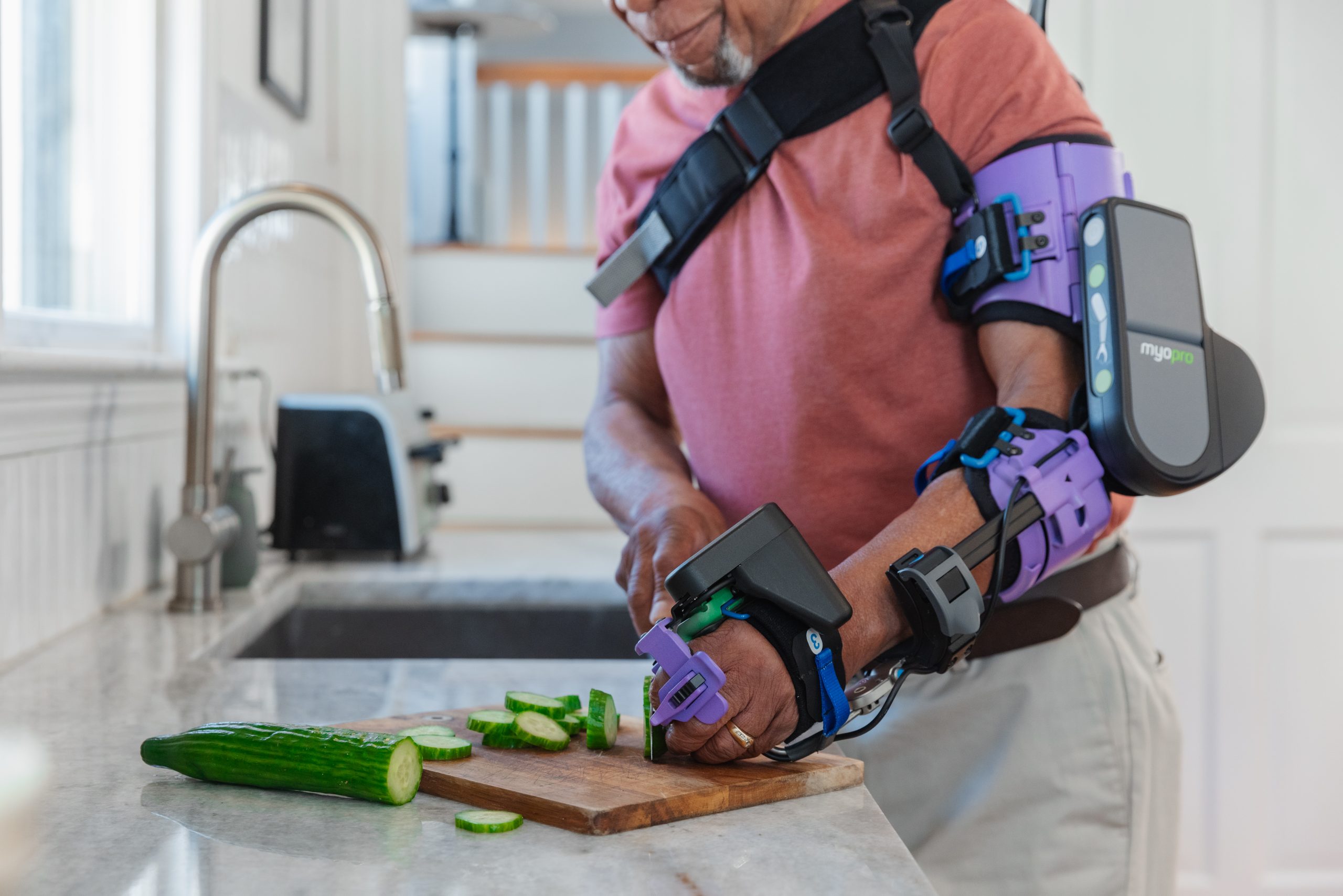
The MyoPro® is a myoelectric upper-extremity brace designed to help improve arm and hand function for individuals with upper-limb weakness or paralysis.
This page is for physicians, therapists, prosthetists, orthotists, and other healthcare professionals involved in evaluating, referring, documenting, or supporting appropriate patients.
Please contact us: myoconnect@myomo.com
Who may be appropriate?
Start with simple functional signs before moving into detailed screening. A potential candidate may present with one or more of the following characteristics.
Patient has arm or hand weakness or paralysis that limits use of the affected limb.
Rehab progress has plateaued or meaningful arm and hand function remains limited.
Daily activities such as dressing, hygiene, self-feeding, reaching, or carrying remain difficult.
Cognition and motivation remain strong enough to participate in evaluation, training, and home use.
Common diagnoses may include chronic stroke, brachial plexus injury, traumatic brain injury, or incomplete spinal cord injury.
Multidisciplinary care
Each professional group plays a different role in recognizing appropriate patients, documenting need, supporting therapy, coordinating fitting, and helping patients work toward functional goals.
Physicians help identify medical need, document the patient presentation, and support referral or prescribing pathways.
View physician resources → TherapistsOccupational and physical therapists help evaluate function, train task use, and support carryover into daily activities.
View therapist resources → Prosthetists / OrthotistsProsthetists and orthotists collaborate on evaluation, shape capture, fitting, adjustment, and user experience.
View O&P resources →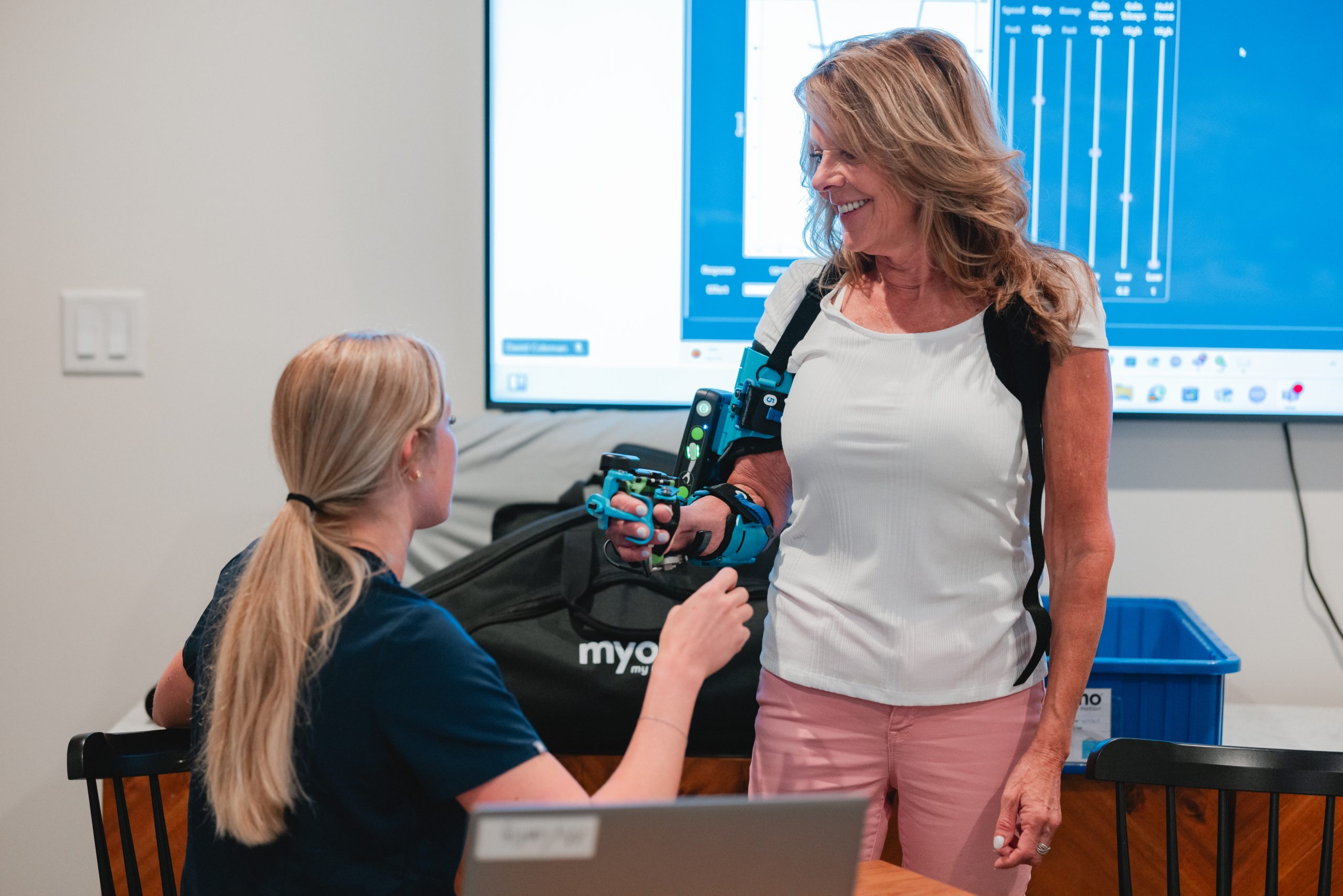
How the MyoPro® works
MyoPro® is custom fabricated and uses myoelectric control to assist movement when the user attempts to move their affected arm or hand.
Deeper screening information
These details are intended for clinicians who are ready to review more specific screening considerations after identifying a potential candidate at a high level.
Resources
Use these links when you are ready to go deeper into clinical tools, published evidence, or common healthcare professional questions.
Access screening tools, training materials, forms, videos, software links, and resources for MyoPro® evaluation and care.
Open resources →Review publications and evidence related to MyoPro® and myoelectric upper-limb orthoses.
View evidence →Find answers to common questions about candidacy, the care pathway, documentation, and next steps.
Read FAQs →