For occupational and physical therapists
Therapists play an important role after MyoPro® delivery by helping patients practice functional activities, build confidence, and carry MyoPro® skills into daily routines.
MyoPro® therapy in action
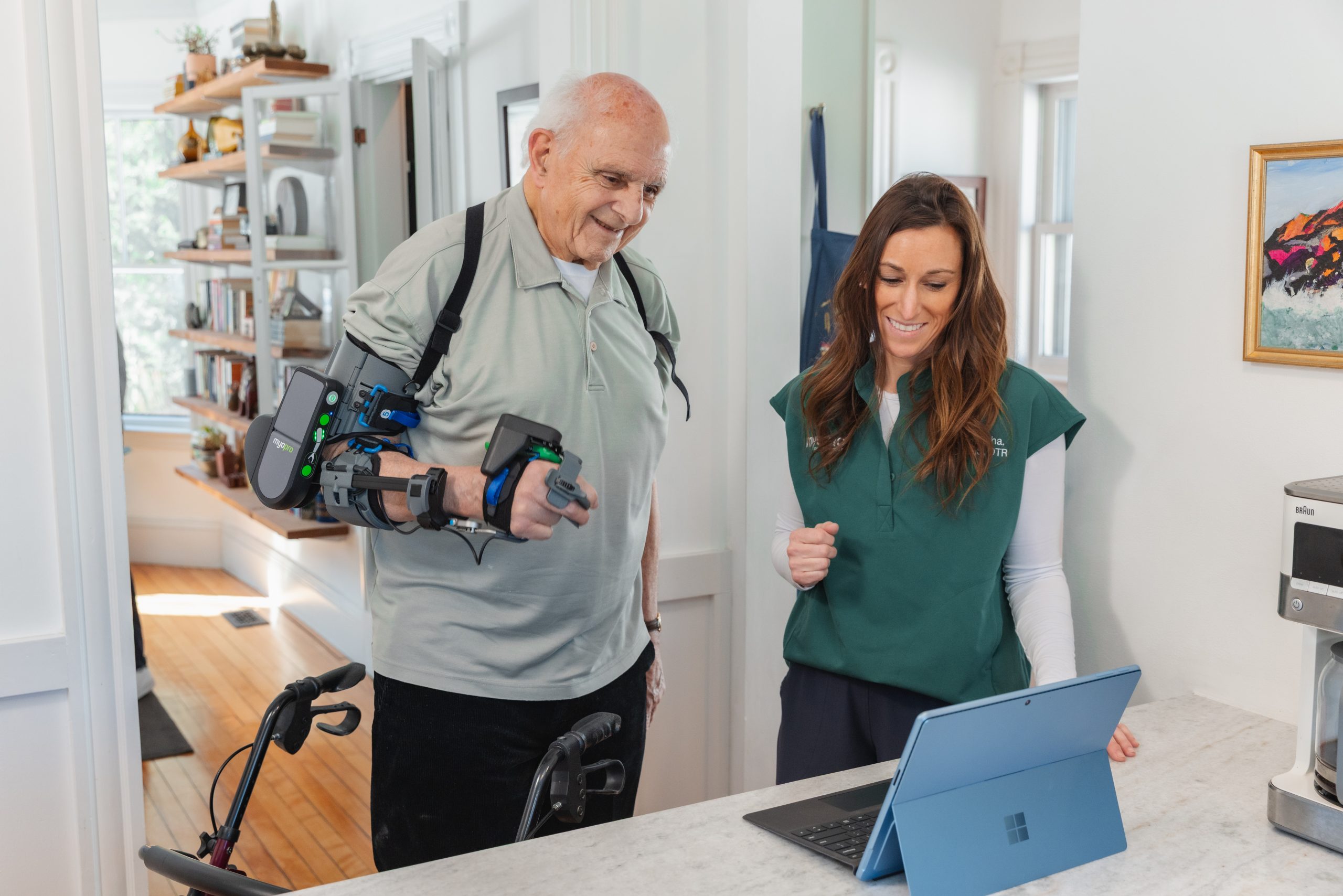
Use this video library as a quick orientation to functional tasks, patient training, and how the MyoPro® may be used during therapy and daily activities.
Therapy after MyoPro® delivery
When people learn a new skill such as riding a bike or playing an instrument, it takes practice, patience, and dedication. The same is true for learning how to operate and use the MyoPro® to complete functional tasks.
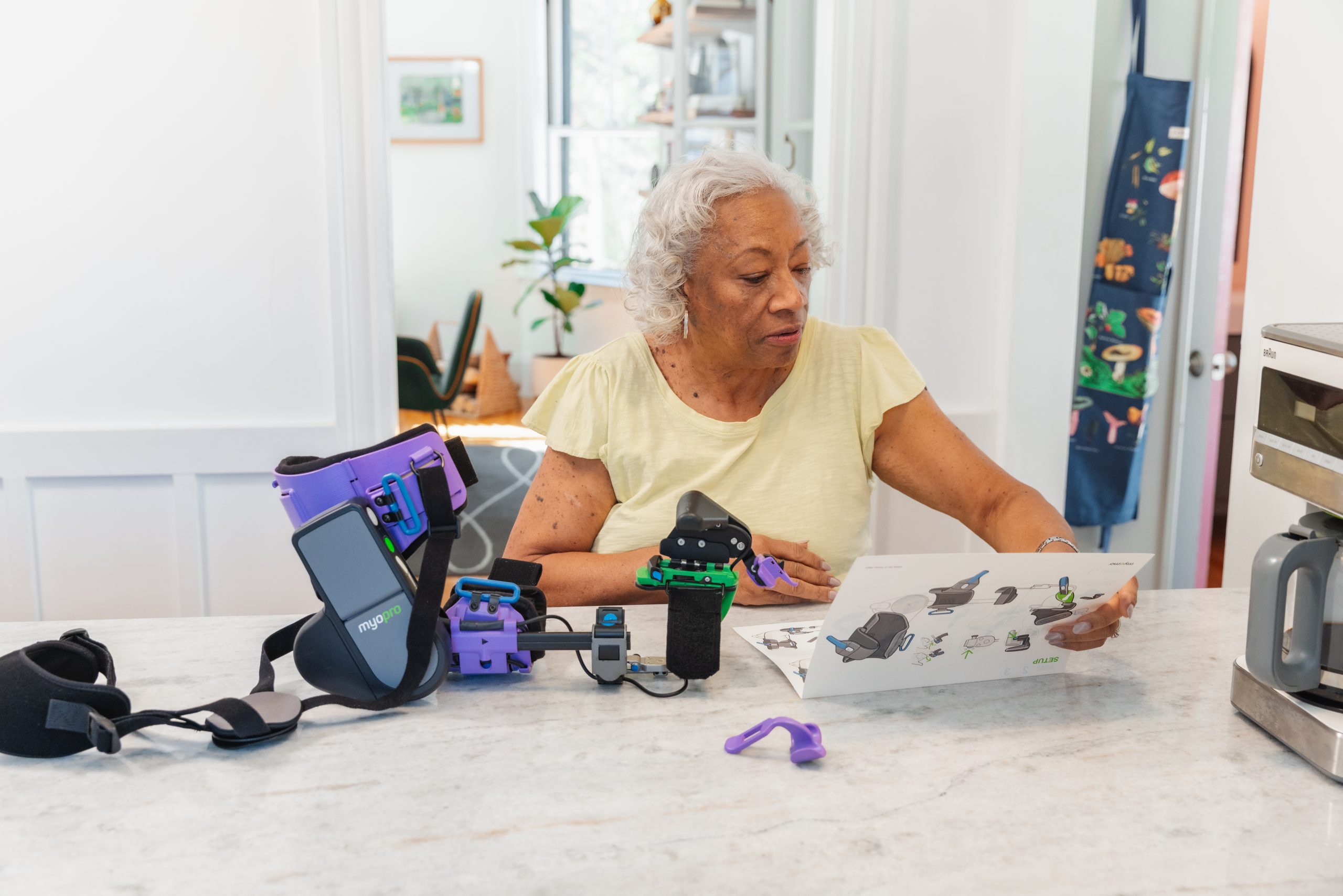
Each MyoPro® patient is recommended to attend occupational or physical therapy after receiving their MyoPro®. Therapy helps patients develop proficiency and independence through functional task practice, muscle control and coordination, donning and doffing, and home care training.
Once trained on the MyoPro® system, therapists can help develop a customized treatment plan designed to maximize patient function and overall success.
With therapy, MyoPro® patients can practice functional activities and build confidence using the MyoPro® during activities of daily living such as cooking, cleaning, opening doors, and moving objects.
Our goal is to improve the lives of people suffering from upper-limb paralysis or weakness by providing effective, safe, and reliable medical products and services of the highest standard of quality.
Candidate recognition
Refer appropriate patients to Myomo for next steps.
Potential diagnoses may include stroke, brachial plexus injury, traumatic brain injury, incomplete spinal cord injury, and other neurological conditions causing upper-extremity weakness or paralysis.
Chronic stroke patients or other patients with ongoing upper-limb weakness or paralysis may be appropriate for MyoPro® screening.
Rehab progress has plateaued, or meaningful arm and hand function remains limited.
The patient continues to have difficulty using the affected arm or hand during daily activities.
The patient remains motivated and has cognition that supports learning and carryover.
Refer the patient to Myomo so the appropriate team can begin the screening process.
Patient referral
Therapists can refer patients to Myomo for the next step in the screening process. The referral form helps route patient information to the appropriate team.
Resource library
Use these resource cards for therapist-facing forms, manuals, software, app support, instructional videos, and training resources.
Use our MyoPro® Screening Form to see if your patient is a candidate.
Open screening form →Review therapy after MyoPro® delivery, treatment planning, task practice, donning/doffing, and home carryover.
Open role of therapy document →Access clinician-facing videos for MyoPro® training, function, and patient support.
Watch videos →Download or access software resources used to configure a patient’s MyoPro® to their needs.
Open software resources →Access app downloads, clinician app manual, and support information for mobile app use.
View app support →Find clinical forms, device manuals, and related support materials on the Clinical Resources page.
Open forms and manuals →
Email our clinical training team to request access to the therapist course for the MyoPro® 2x.
Request therapist course access →Myomo App Support
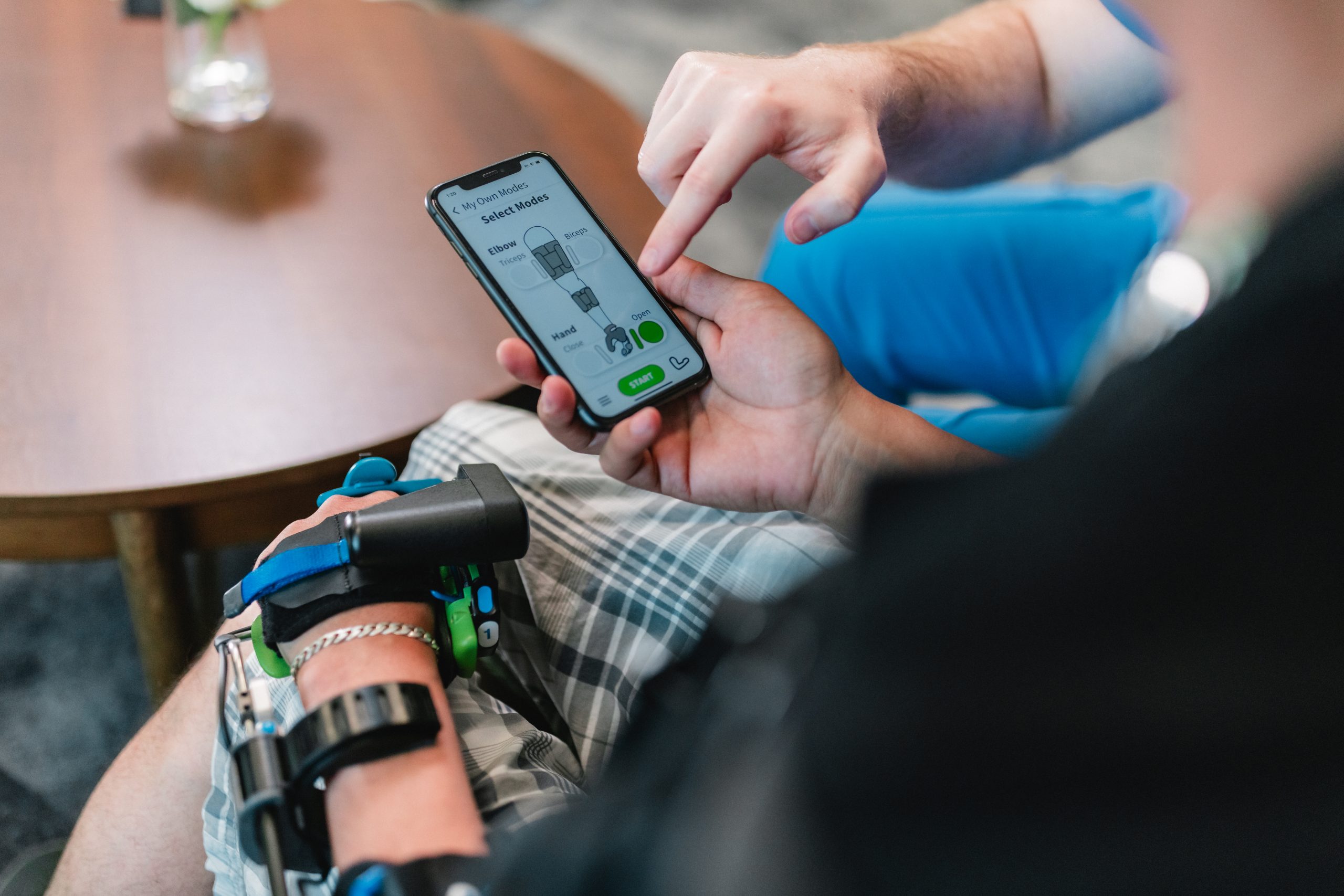
The Myomo App is a companion application for compatible MyoPro® devices. It supports real-time visualization of muscle activity, prescribed mode selection, movement and repetition tracking, and clinician-only adjustment of ROM and EMG parameters.