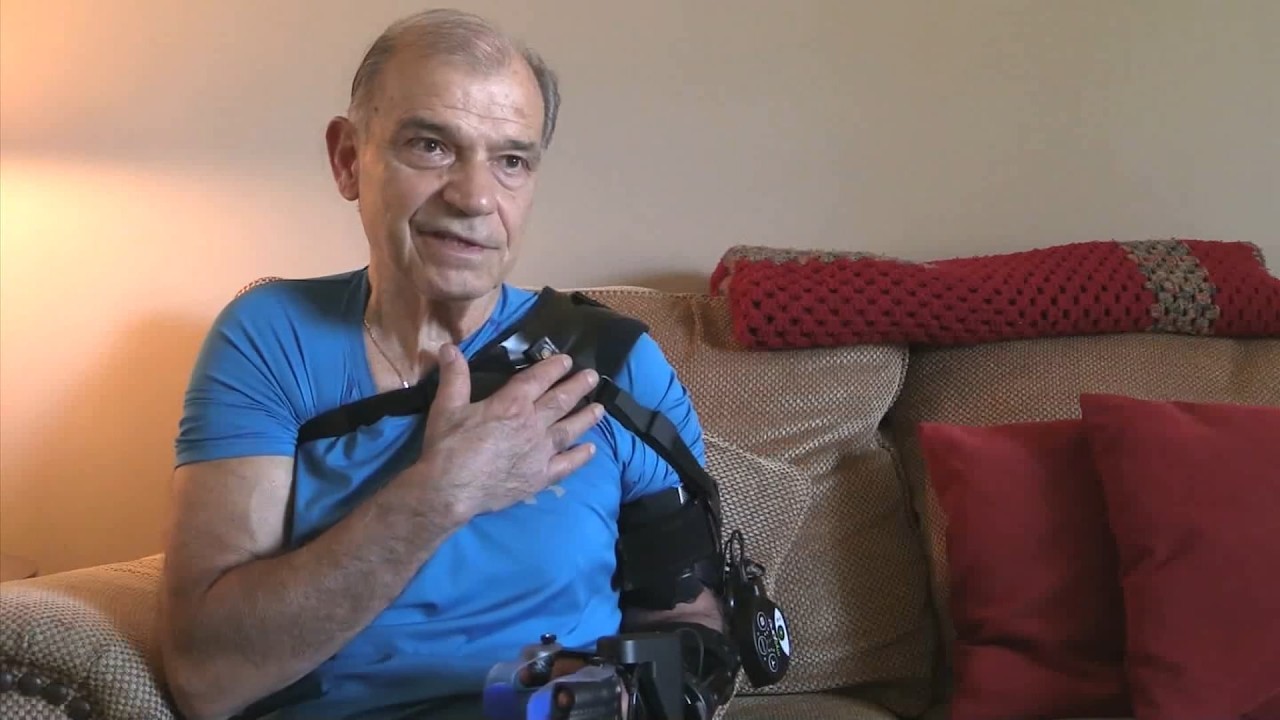
Vince: stroke
Vince had a stroke that took the use of his arm. In this video he shows how he uses his MyoPro Motion G to get through activities of daily living at home, task by task.
Watch Vince's story
Baking a cake, opening a door, washing dishes, often we take for granted simple tasks in life. These are stories of how the MyoPro orthosis helped patients take back some parts of their lives due to stroke or BPI. Of course, every patient is different and only your doctor can tell you if the MyoPro is right for you or your loved one. Individual results may vary.
Vince had a stroke that took the use of his arm. In this video he shows how he uses his MyoPro Motion G to get through activities of daily living at home, task by task.
Watch Vince's story
Jay Jay is a retired Marine and a stroke survivor. He demonstrates how the MyoPro Motion G has helped him get back to the tasks around the house that matter to him.
Watch Jay Jay's story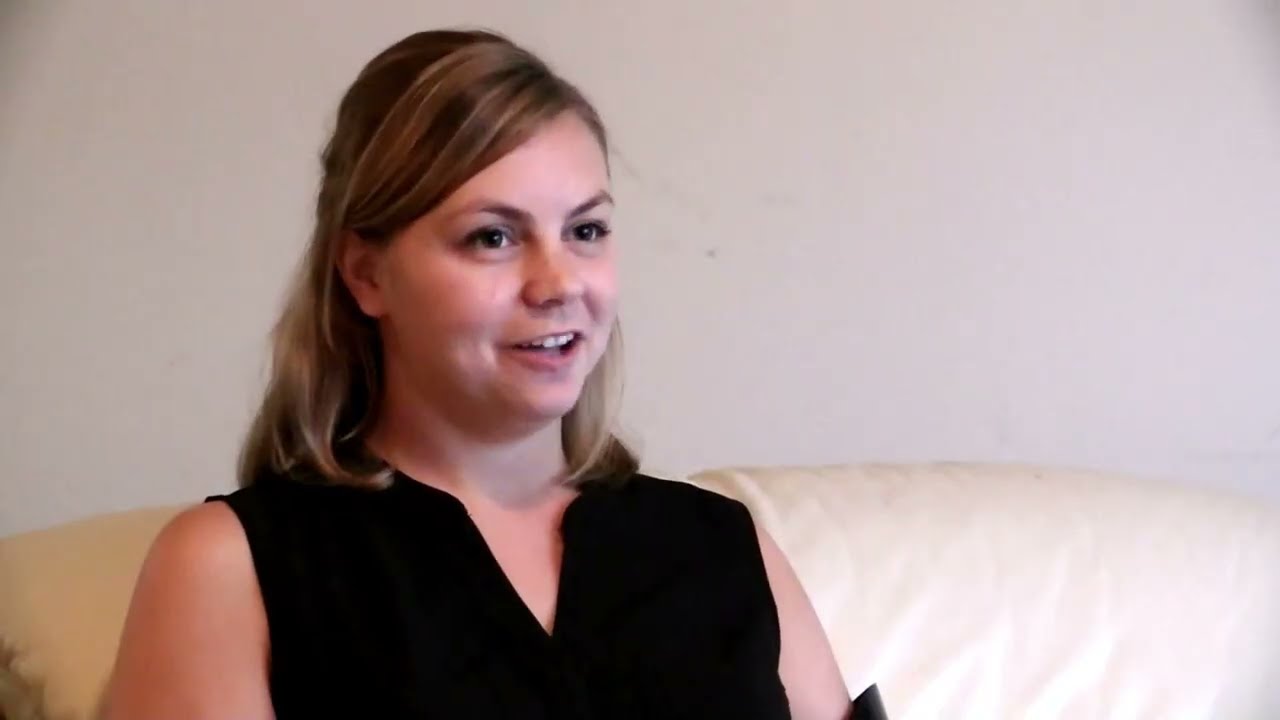
Complications from brain surgery interrupted Michelle's training as an occupational therapist. She talks about how her MyoPro Motion W made it possible to return to her studies.
Watch Michelle's story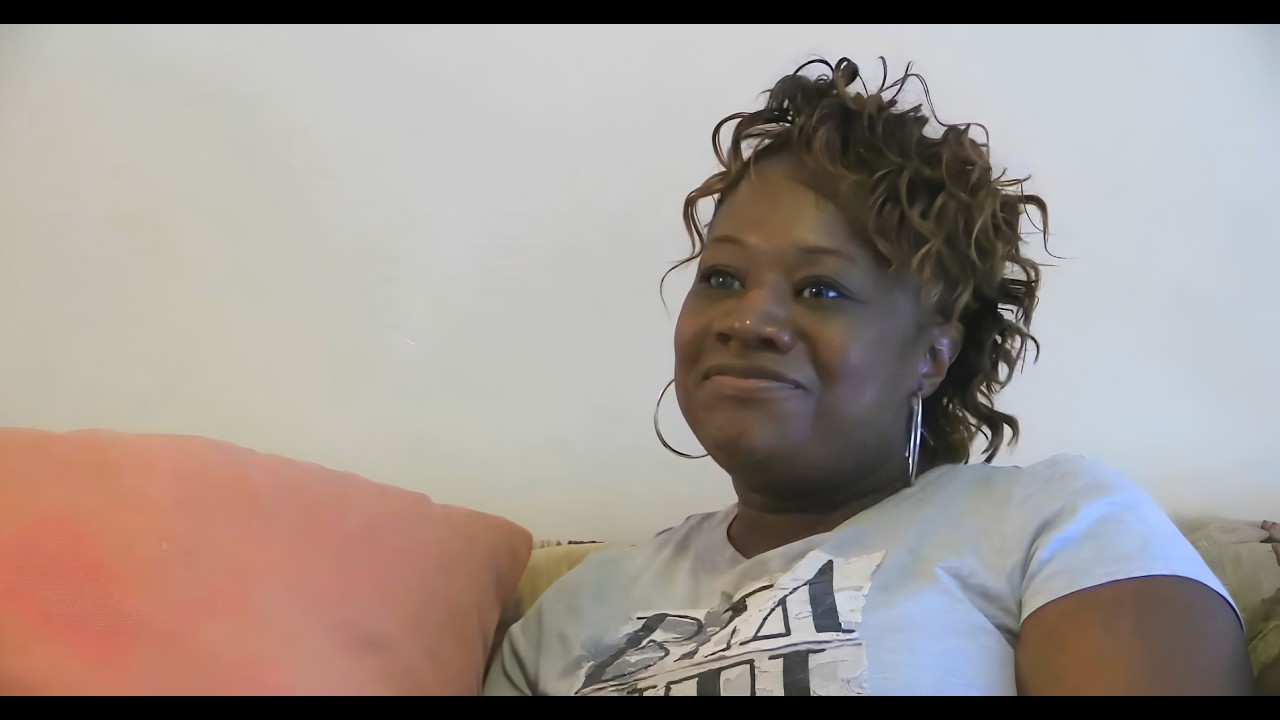
After a stroke, Lucinda was fitted with a MyoPro Motion G. She walks through the everyday tasks she now performs with it and what using the device is like day to day.
Watch Lucinda's story
A traumatic brachial plexus injury kept Alex out of work. He shows how he uses his MyoPro Motion W on the job, and how a new articulating handpiece has increased what he can do with it.
Watch Alex's story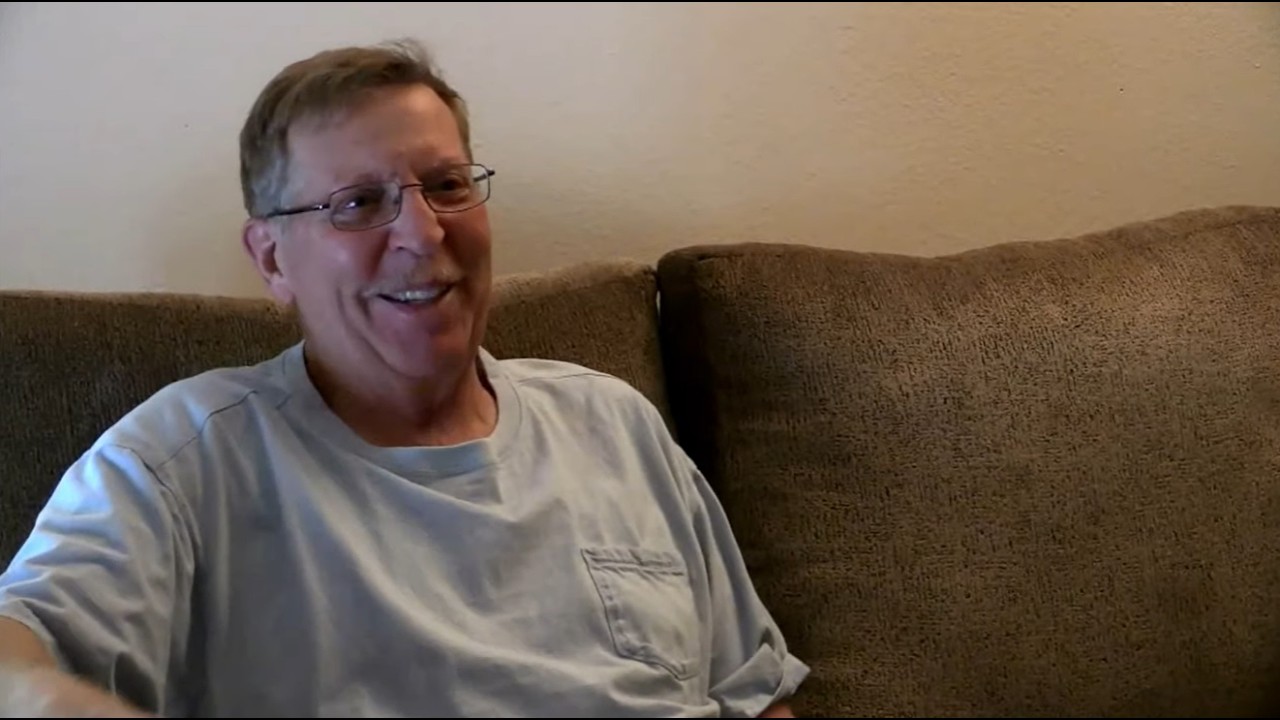
David uses a MyoPro Motion E to be more independent after his stroke. He talks about simple things that came back, like trips to Costco and the hardware store, and shares his advice for anyone considering the device.
Watch David's story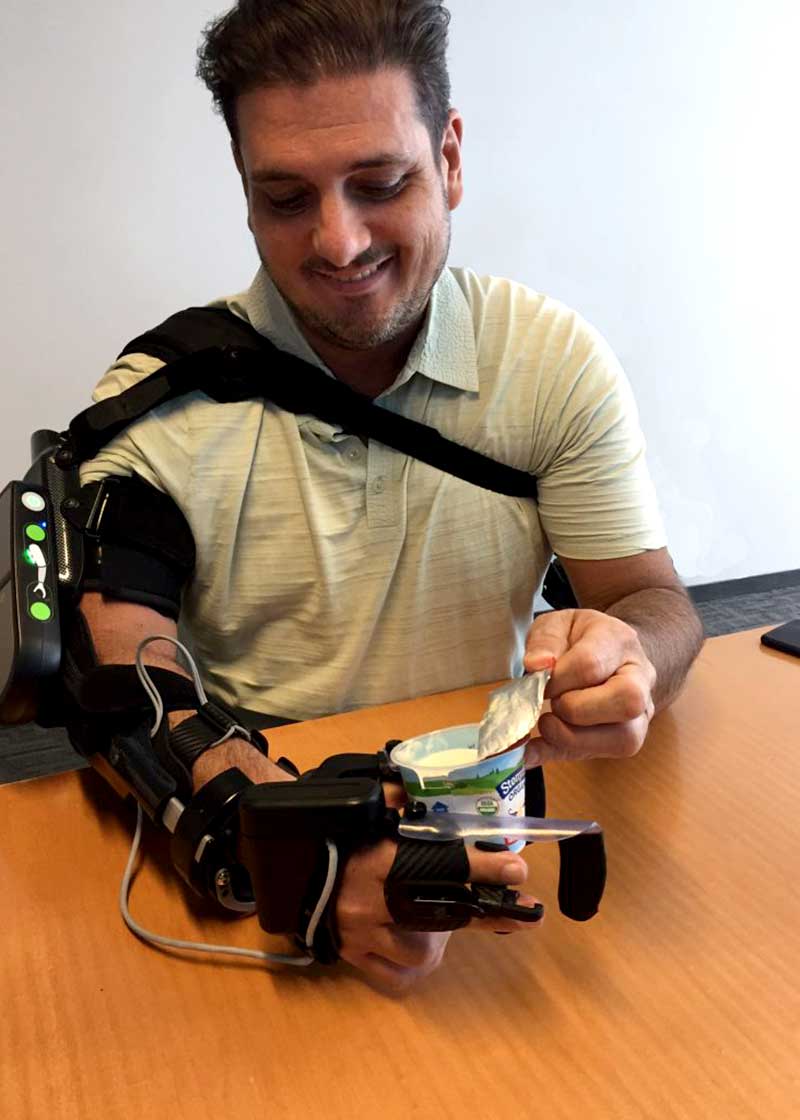
A stroke in August 2018 left Greg, of Royal Oak, Michigan, paralyzed. Walking came back with assistive devices; his arm did not until a Myomo evaluation. Two months in, wearing the MyoPro six to eight hours a day alongside therapy, his bicep strength is improving and his next goal is a fork and knife in both hands.
Read Greg's full story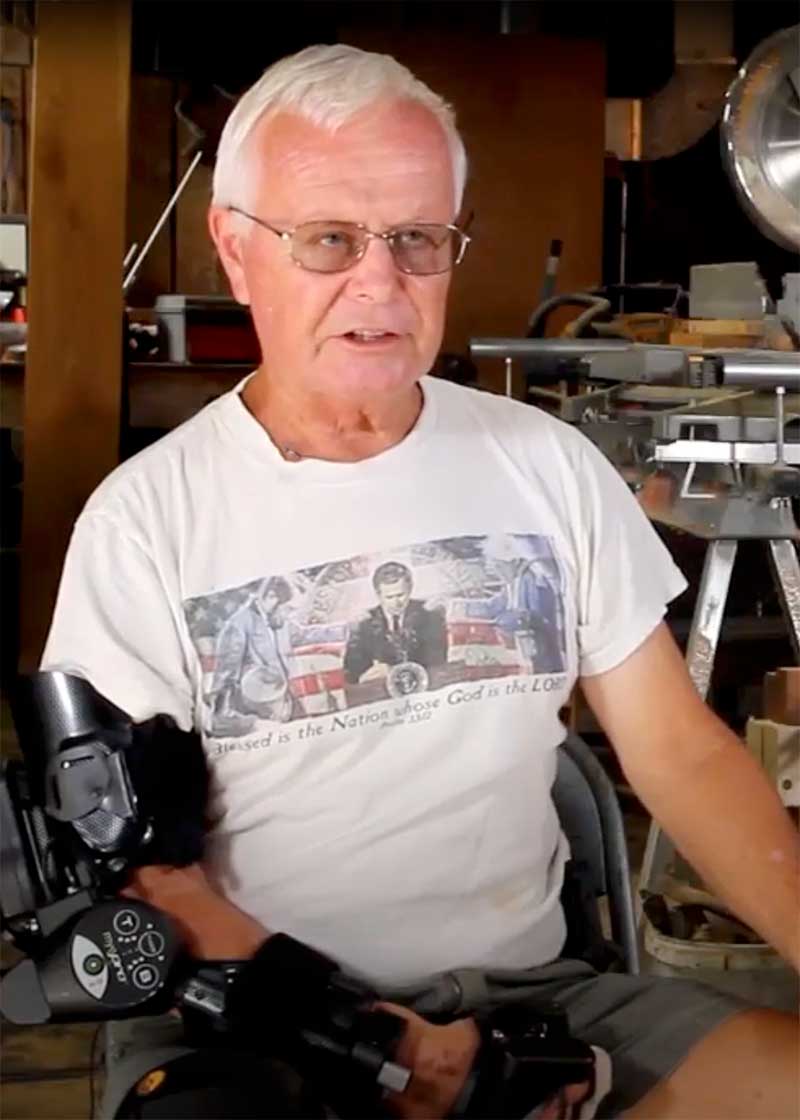
Dave ran an HVAC business and loved woodworking until a stroke at 61 took his right arm. After six years of rehab through the Baltimore VA, an occupational therapist suggested the MyoPro. He now handles the dishwasher and laundry, and made 20 walking canes in his first four months back in the workshop.
Read Dave's full story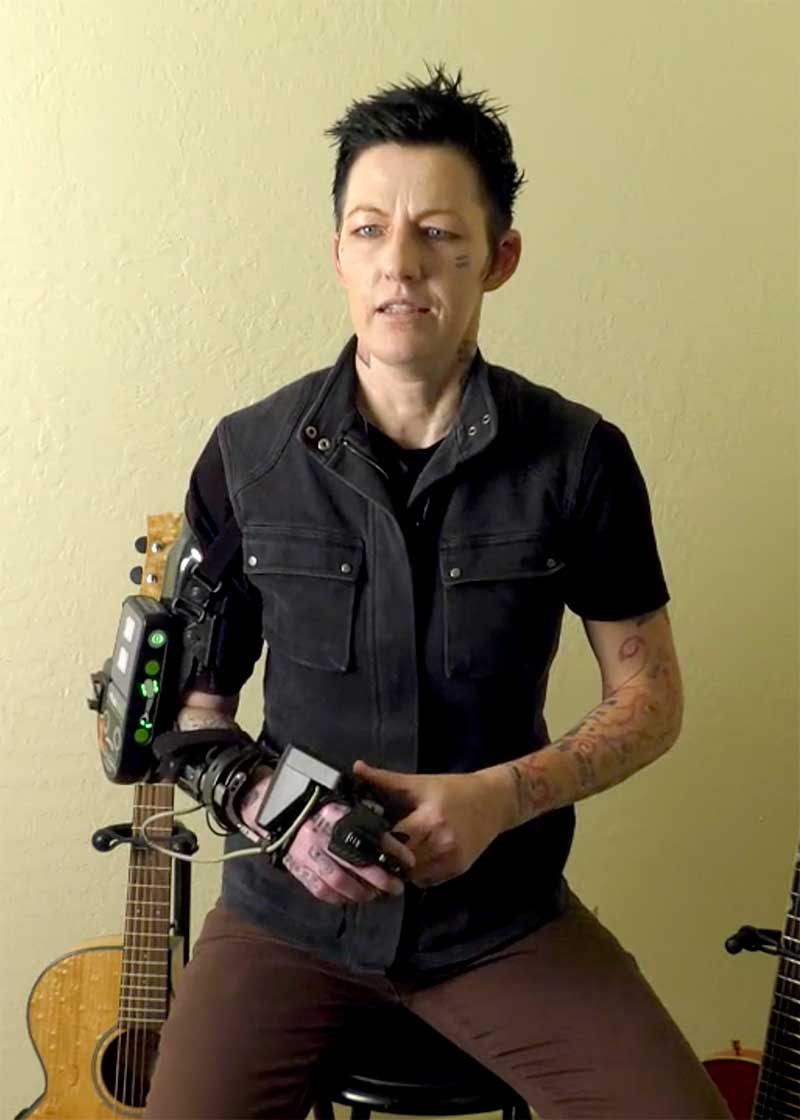
A hit-and-run motorcycle crash in 2015 left Sara, a Phoenix guitarist and hairdresser, with 26 fractures and a brachial plexus injury. Told nothing could be done, she kept looking, found the MyoPro through a friend, and now plays guitar with 3D-printed pick attachments on the brace. "I feel cool wearing it."
Read Sara's full story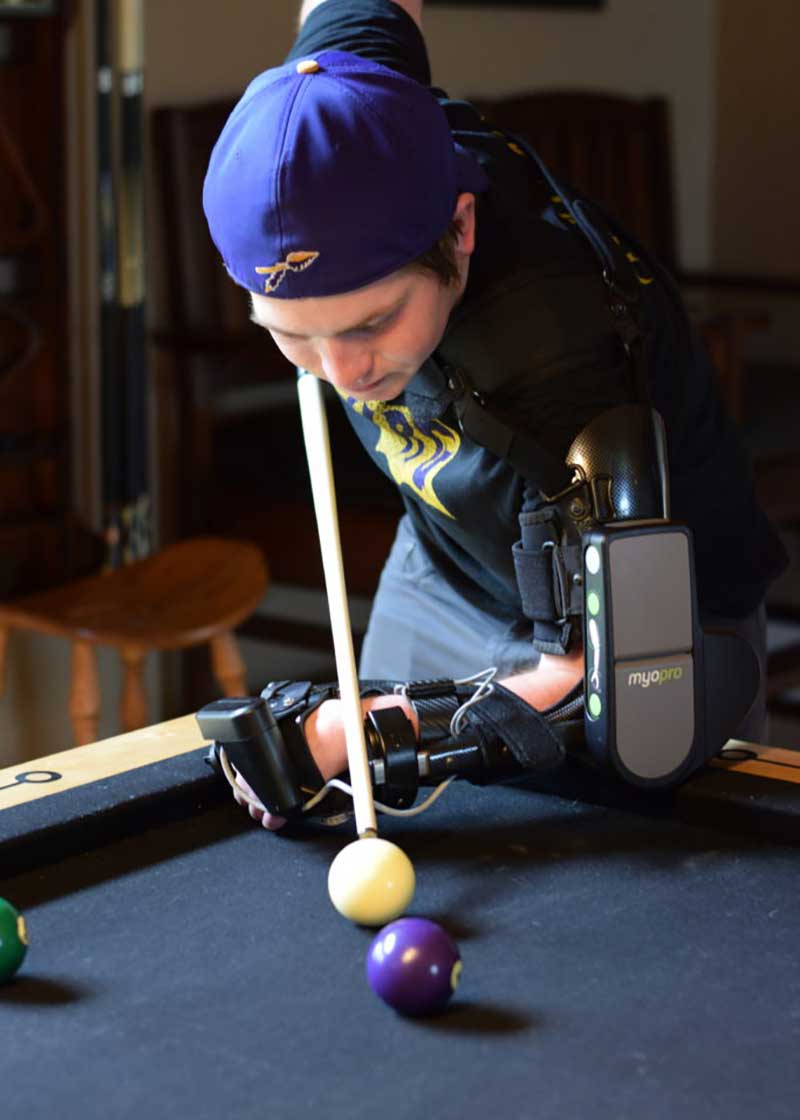
An ATV accident at age eight left Zeke with brain, spinal cord and brachial plexus injuries, and one working arm. Surgery brought little progress. At 18 he found the MyoPro online and booked a trial: "watching my arm bend for the first time in 10 years… I couldn't even picture it." A month in, he uses his left arm more than ever.
Read Zeke's full story
A motorcycle accident at 51 left Carrie with compound fractures, a dislocated shoulder and elbow, and a brachial plexus injury that left her arm and hand lifeless. After surgery at Mayo Clinic her surgeon recommended the MyoPro. Three months on she wears it daily and carries, cuts and opens things with two hands again. "It has also helped to give me my independence back."
Read Carrie's full story
A peer-reviewed study from Ohio State University, published in Archives of Physical Medicine and Rehabilitation in 2017, measured 18 chronic stroke survivors with moderate arm weakness wearing the MyoPro Motion G. Fugl-Meyer scores improved 47 percent on average, from 18.6 to 27.3, with gains recorded as soon as the device was put on, before any training.
Read the study summaryThe MyoPro helps many people regain functional use of a weakened or paralyzed arm, but it is not the right device for every person or every condition. These are the considerations people most often raise, answered directly.
The MyoPro works by detecting the faint electrical signals your own muscles produce. If there is no detectable signal in the affected arm, the device cannot assist movement. A clinical evaluation is required to determine candidacy, and some people who are assessed are found not to be suitable candidates. This is established during evaluation rather than after purchase.
The MyoPro is a custom-fabricated medical device and it is expensive. Medicare fee schedule rates were published at an average of $33,481 for the MyoPro Motion W (HCPCS L8701) and $65,872 for the MyoPro Motion G (HCPCS L8702) when CMS set them in April 2024; the exact amount varies by state and is updated each year. Most users do not pay these amounts directly. Coverage is available through Medicare Part B, Medicare Advantage, many private insurers, and the Department of Veterans Affairs, but the prior-authorization process takes time, often several weeks to a few months depending on the carrier, and out-of-pocket costs depend on the individual policy. Our team works through this process with each patient. Read our cost and coverage guide.
The device does not work perfectly on the first day. Most users need several weeks of practice, usually alongside therapy, before the MyoPro feels natural. Sensor placement matters, and early sessions often involve adjustment to get consistent responsiveness. Users who persist through this period report the strongest outcomes.
The MyoPro is an orthosis, not a cure. It assists elbow and hand movement so that functional tasks become possible. It does not restore the arm to its pre-injury condition, and expectations set accurately at the outset are a strong predictor of satisfaction.
The MyoPro is worn externally on the arm and is visible in daily use. Some users are conscious of this at first. Sara, who plays guitar with hers, puts it simply: "I feel cool wearing it."
Published research on myoelectric arm orthoses has measured what MyoPro users can do with and without the device, and how their own rating of arm function changes over months of home use. In a three-month prospective study of 18 people with chronic arm weakness after stroke, on average 4.6 years after the stroke, participants completed four everyday tasks such as bringing an object to the mouth and carrying a bag between 36 and 68 seconds faster with the MyoPro than without it. In a retrospective study of 19 chronic stroke users followed through roughly a year of home use, scores on the DASH questionnaire, a standard 0 to 100 measure of arm, shoulder and hand disability where lower is better, improved by an average of 18 points; 17 of the 19 users improved, 13 reached a change large enough to be considered clinically meaningful, and most had reported that their arm function had plateaued before they started using the MyoPro. Published research on myoelectric arm orthoses includes:
See the full list of published studies on our Research and Evidence page.
Outcomes vary by individual and depend on how much muscle signal remains in the affected arm. Users who are assessed as candidates and who complete the training period commonly report being able to perform daily tasks such as eating, dressing, carrying objects and two-handed activities that were not possible before. It assists movement rather than restoring the arm to its pre-injury condition, and a clinical evaluation determines whether a person is a candidate.
The points users raise most often are the cost and the length of the insurance authorization process, the learning period required before the device feels natural, the need for correct sensor placement, and the fact that the device is visible when worn. Users who understand these points before starting generally report higher satisfaction.
The MyoPro is a custom-fabricated device. Medicare fee schedule rates were published at an average of $33,481 for the MyoPro Motion W (HCPCS L8701) and $65,872 for the MyoPro Motion G (HCPCS L8702) when CMS set them in April 2024; the exact amount varies by state and is updated each year. Most users do not pay this directly. Coverage is available through Medicare Part B, Medicare Advantage, many private insurance plans and the Department of Veterans Affairs, and out-of-pocket cost depends on the individual policy. See our cost and coverage guide.
Most users need several weeks of regular practice, usually alongside therapy, before the device feels natural to use. The first sessions typically involve adjustment to sensor placement and learning to produce consistent muscle signals.
People with no detectable muscle signal in the affected arm are not candidates, because the device relies on those signals to function. Certain joint contractures or skin conditions may also prevent safe use. Candidacy is determined by clinical evaluation before any commitment is made.
It is frequently covered. Medicare Part B, Medicare Advantage plans, many private insurers and the Department of Veterans Affairs have all covered the MyoPro. Prior authorization is normally required and the process can take anywhere from several weeks to a few months, depending on the carrier. See our insurance coverage page.
The MyoPro is used by people with arm weakness or paralysis resulting from stroke, brachial plexus injury, traumatic brain injury, spinal cord injury and certain neuromuscular conditions. Each case is assessed individually.
Patient stories on this page describe individual experiences in detail, including the evaluation process, the training period and specific functional outcomes. Experiences differ between individuals, and a clinical evaluation is the only way to establish what is realistic in a particular case.
A clinical evaluation is the only way to know. It takes a few minutes to find out whether you may be a candidate.
Am I Eligible? 888-669-1033